
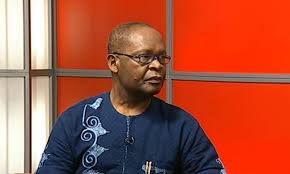
Below is a structured, comprehensive of Joe Igbokwe Biography, covering his early life, education, career, political journey, net worth (as available), controversies, and legacy.
Early Life & Origin
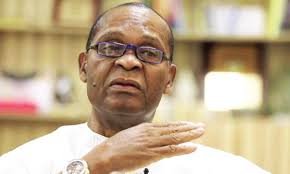
Joe Igbokwe hails from Nnewi, in the Nnewi North Local Government Area of Anambra State, in Nigeria’s southeastern region.
His state of origin is Anambra State.
Different sources report different birthdates, and there is some ambiguity around his early years:
- One source claims he was born on April 30, 1956 in Uruagu, Nnewi.
- Some other sources (less reliable) mention October 1962 as his birth month/year.
Given the weight of more detailed profiles, the 1956 date is more widely cited.
He was raised in an Igbo family in Nnewi. His upbringing is described as modest but influential in developing his sense of discipline, public engagement, and strong work ethics.
His father, commonly referred to as Chief Okonkwo Igbokwe in some versions, was involved in business in Nnewi (especially in trade or auto‐parts) and instilled values of hard work in his children.
Early life was not without struggle; he had to contend with financial hardship, working menial jobs as a youth, borrowed fees, and other challenges to stay in school.
Education & Professional Training
Primary & Secondary Education
- He attended primary and secondary schools in Anambra State.
- In Okongwu Memorial Grammar School (OMGS), Nnewi, he was noted as performing well academically and even served as Head Boy.
University Education
- He gained admission to University of Nigeria, Nsukka (UNN) to study Mechanical Engineering.
- Some sources say he was admitted in 1980 and graduated in 1985.
- After university, he served in the National Youth Service Corps (NYSC) in Ogun State, as required of Nigerian graduates.
Additional Training & Certifications
- In addition to his engineering degree, Joe Igbokwe is said to have pursued studies in public relations, political communications, or management to support his transition into public service and politics.
- He is an engineer by training, and some biographical sources list him as a mechanical engineer.
Thus, his academic foundation combined technical knowledge (engineering) with skills in communication and public affairs.
Early Career & Struggles
Joe Igbokwe’s trajectory from modest means to prominence involved various hustles and enterprises.
Early Work in Lagos & Menial Jobs
After completing NYSC, he moved to Lagos in the mid-1980s.
To sustain himself, he took on laborious work, such as carrying sawdust in a sawmill (7 shillings, 6 pence per day) and other menial chores, to make ends meet.
He also worked as a danfo (bus) conductor in the Ajegunle / Idioro axis in Lagos.
Entrepreneurial Ventures
- He later joined his brother in a supermarket business in Surulere, Lagos, while still trying to find his footing.
- Using a loan secured via his NYSC discharge certificate and degree certificate as collateral, he established a restaurant business on Western Avenue, Lagos.
- Simultaneously, he ventured into auto spare parts importation with a shop in Surulere (Lawanson).
- These businesses grew, allowing him to repay his loan and build a platform for further success.
Publishing & Thought Leadership
- In 1995, he authored a book titled “Igbos: 25 Years After Biafra”, reflecting on the post-Biafra plight of the Igbo people.
- He also established National Vision Newspapers around 1997 to engage public discourse and influence opinion.
- In 1999, he released “Heroes of Democracy”, and later co-authored “2007: The IBB Option” with Peter Claver Oparah.
Through these activities, he bridged business, writing, and politics, positioning himself as both an entrepreneur and public commentator.
Political Journey & Public Roles
Joe Igbokwe’s political involvement has been extensive, particularly in Lagos State and within the All Progressives Congress (APC).
Entry into Public Service
- Under Governor Bola Ahmed Tinubu in Lagos, he was appointed the pioneer General Manager of LASIMRA (Lagos State Infrastructure & Regulatory Agency), a role he held for nearly a decade.
- Later under Governor Babatunde Fashola, he continued in that agency or similar roles in infrastructure oversight.
- In 2015, he was moved to the Wharf Landing Fees Collecting Authority (Apapa) as Chairman.
- He also served as Special Adviser on Drainage & Water Resources to Lagos State’s governor.
Party Politics & Roles in APC
- Over the years, Igbokwe has been a stalwart in the APC (and its antecedent parties).
- He functioned as Publicity Secretary for the Lagos State chapter of the APC or earlier parties (AC, ACN) since the mid-2000s.
- He has held influence in coordinating party messaging and media outreach, often being seen as an articulate spokesperson for the party.
- At some point, he was Chairman of the Conference of APC Publicity Secretaries (CAPS) in Nigeria, emphasizing his presence in the party’s communications architecture.
Recent Political Shifts
In recent years, Igbokwe has publicly expressed criticisms of the Tinubu administration, signaling a shift from staunch supporter to vocal commentator and critic.
He has lamented issues such as high cost of living, currency devaluation, policy failures, and has even called for reform in aspects of governance.
This evolution in posture has drawn attention, given his long standing loyalty to Tinubu and APC.
Achievements & Contributions
Joe Igbokwe’s career is marked by a blend of infrastructural, political, and intellectual contributions. Below are some of the key achievements:
Infrastructure & Governance
- As the pioneer GM of LASIMRA, he helped oversee regulatory frameworks for infrastructure in Lagos, an urban mega-centre with pressing infrastructure demands.
- His role in Wharf Landing Fees Authority (Apapa) gave him oversight in port revenue collection and logistical operations in Nigeria’s most active port region.
- As Special Adviser on Drainage & Water Resources, he has been involved in policies regarding flood control, drainage systems, and water management critical issues in Lagos.
Intellectual & Media Influence
- His authorship of “Igbos: 25 Years After Biafra” provided a platform to critique and reflect on Igbo marginalization and national issues.
- Through National Vision Newspapers, he has been an opinion leader, contributing columns, commentary, and thought leadership on governance and Nigeria’s challenges.
- His presence in media as a vocal APC spokesperson has made him a recognizable figure in political debates, influencing public discourse in Lagos and beyond.
- instagram Account
Political Mobilization & Advocacy
- He has played roles in organizing and crafting narratives for APC campaigns in Lagos State and Nigeria more broadly.
- At times, he has advocated for youth engagement, infrastructural accountability, and governance reforms through public statements and platforms.
While some of his achievements are widely recognized, many others operate behind the scenes (e.g. party strategy, communications) and thus are less visible in the public record.
Controversies & Criticisms
A public career of decades inevitably comes with controversies. Joe Igbokwe has not been exempt.
Tribal & Identity Critiques
Given his prominence as an Igbo in Lagos (a Yoruba-majority environment), some critics accuse him of distancing from his Igbo roots or betraying Igbo interests.
His public remarks regarding Igbo politics, protests (e.g. #EndSARS), and Lagos dynamics have sometimes drawn backlash from Igbo groups who view his positions as confrontational or antagonistic.
Political Loyalty & Shifts
His transformation from being a strong supporter of Tinubu to a critic has been interpreted by some as opportunistic or ill-timed.
Critics argue that his vocal criticisms now undermine the loyalty he once offered, and they question the sincerity of his turnaround.
Accusations & Rumors
- Some online forums and Nairaland posts allege murky pasts involving his family and possible involvement in local controversies in Nnewi, though these claims are largely unverified and should be treated cautiously.
- Critiques also focus on his public commentary style, which sometimes is deemed harsh, polarizing, or insensitive by detractors.
Because many criticisms stem from perception, media narratives, or social media posts, they should be approached with nuance and weighing credible sources.
Personal Life & Values
Joe Igbokwe tends to keep his private life relatively out of the limelight, but certain details are known:
- He is married to Dr. (Mrs.) Grace Igbokwe.
- The couple has children, though specific names and details are seldom publicized.
- In interviews, he emphasizes his role as provider, fatherhood, and the importance of faith in his daily life.
- His Christian faith is evident in some of his public statements and habits of daily prayer.
His values often reflect discipline, resilience, and a belief in public service. He often frames his narrative in terms of overcoming adversity, duty, and accountability.
Net Worth & Assets
Estimating net worth of public figures in Nigeria is always speculative, given opaque asset declarations and fluctuating valuations. But some sources offer estimates:
- One biographical site suggests his net worth is about USD 5 million.
- That figure, however, is not independently verified by credible financial disclosures or audits.
Given his businesses (auto import, shoreside operations, media, property) plus public offices, it is reasonable to assume he possesses substantial assets in real estate, businesses, and investments. But without transparent financial records, the precise value remains uncertain.
Public Perception & Legacy
Recognition & Influence
Joe Igbokwe is widely recognized in Lagos and in APC circles as a formidable communicator, party strategist, and political voice. His visibility in media debates and party functions cements his influence.
His shift to criticizing the current government draws attention to his independence of voice (or dissent), which many view as a sign of maturity or political recalibration.
Criticisms & Relevance
Not all view him favorably. Some see his criticisms as too late or insincere, especially given his years of party loyalty. Others criticize certain provocative remarks about tribal identity or protests. (
However, his legacy lies in bridging engineering, business, writing, and politics demonstrating how one can move from humble origins to national platforms.
Given his age (if born in 1956, he is in his late 60s as of 2025), his later years may define how his reputation evolves whether as elder statesman, critic, or kingmaker.
Recent News Highlights about Joe Igbokwe Biography
1. Intensified Campaign Against Release of Nnamdi Kanu
Joe Igbokwe has been vocal in opposing calls for the release of IPOB leader Nnamdi Kanu. He argues that Kanu does not deserve pardon and claims that concerns about Kanu’s health are exaggerated.
He labeled Kanu’s reported health issues as a “lie from the pit of hell,” asserting that Kanu is “110 % ok.”
Igbokwe also accused Kanu of instigating violence, destruction of properties, and causing deaths in the South East over the past decade.
He’s specifically warned Omoyele Sowore against leading protests for Kanu’s release, telling him to “run 440” (a colloquial phrase meaning stay away) from the matter.
2. Backlash from Igbo Media & Leaders
In response to his statements, some Igbo groups and media bodies have criticized Igbokwe’s remarks:
The Ndigbo Media Forum Worldwide condemned his dismissal of Kanu’s health claims, saying it was insensitive and lacked empathy.
Some Igbo leaders have issued cautions and admonitions as he continues to speak against Kanu’s release.
3. Reaction to Demolitions in Lagos Trade Fair Area
Another recent issue: Igbokwe publicly questioned the demolition of 19 structures at the Trade Fair area in Lagos, demanding clarity and justifications from authorities.
He expressed surprise and concern about the demolition operation, which disrupted businesses and affected traders, some of whom claim they got no prior notice.
Also Read: Randy Peter Akah Biography: Age, Life, Career, Net Worth & Achievements
Conclusion
Joe Igbokwe is a complex and multifaceted figure in Nigerian politics and public life. From humble beginnings in Nnewi, he navigated hardship, education, entrepreneurship, and public service to emerge as a notable political voice in Lagos and beyond. His roles as infrastructure executive, party communicator, author, and critic reflect breadth and ambition.
While his net worth remains speculative, his impact through infrastructure, public discourse, and partisan strategy is tangible. His recent shift toward more critical commentary suggests a redefinition of his role: from party loyalist to independent interlocutor of governance.
Whether one admires or criticizes him, Joe Igbokwe remains a compelling example of resilience, political evolution, and the tensions inherent in public life in Nigeria.
FAQs
Q1. How old is Joe Igbokwe?
As best as sources suggest, he was born on April 30, 1956, which would make him about 69 years old in 2025.
However, some conflicting sources list other ages or dates, so this estimation is based on the most consistent reports.
Q2. What is Joe Igbokwe’s net worth?
Available estimates place his net worth around USD 5 million, but this is unverified and should be taken as speculative.
Q3. What major controversies has he faced?
He has drawn criticism over perceived betrayal of Igbo interests, harsh commentary on protests, and shifting political loyalty especially his growing public criticism of the Tinubu administration after years of defending it.
 Jerry
Jerry